

Insights
The passport is printed. Is it being opened too?
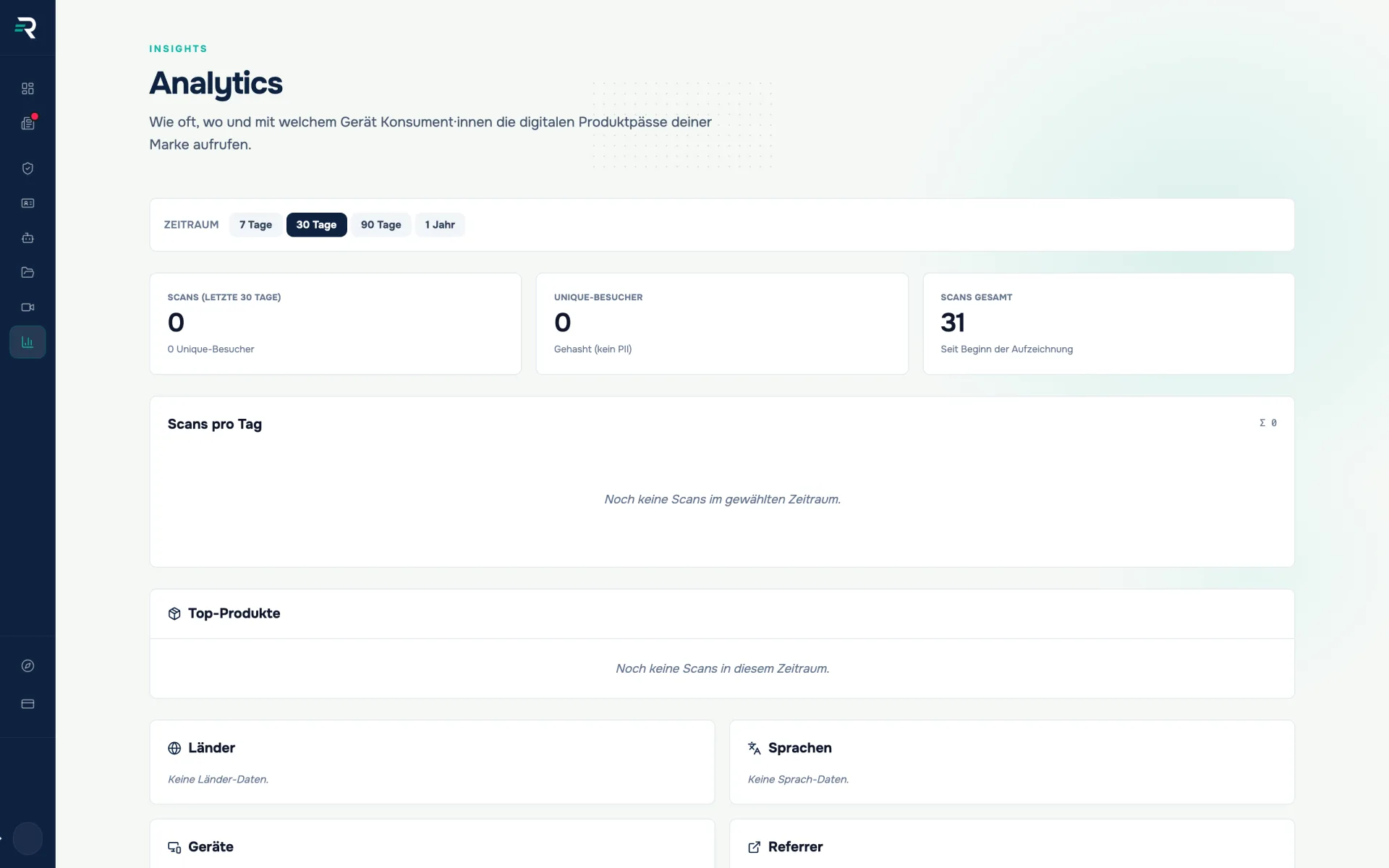
Analytics counts every public view of your product passports — by period, product, country, language, device and where the visit came from.
- Module
- Analytics (insights)
- Periods
- 7 / 30 / 90 / 365 days
- Breakdowns
- Country, language, device, referrer
- Privacy
- no IP storage
How you work with it
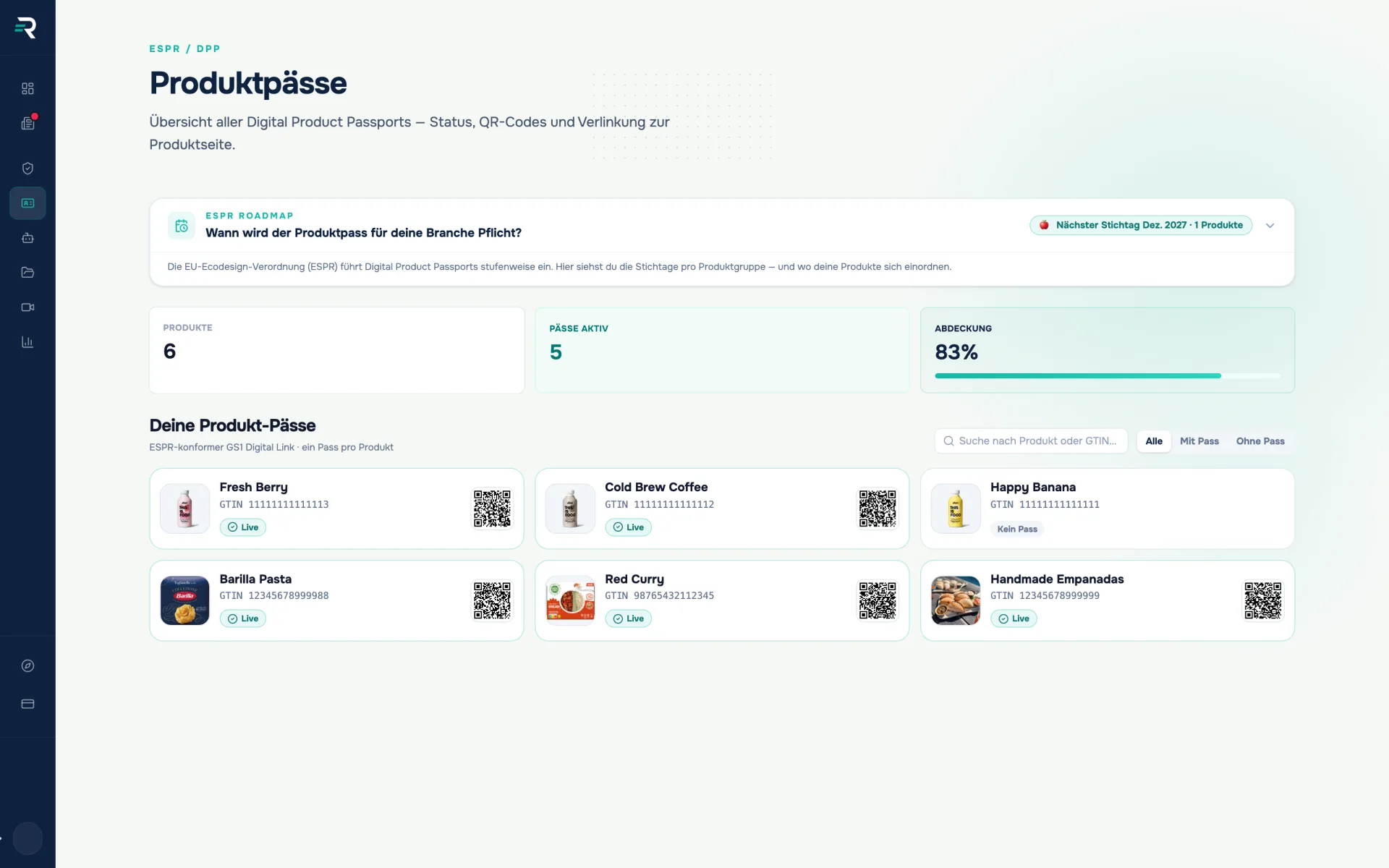
The QR code leads to the passport
Every passport has a QR code pointing at its public address — whether on the label, the outer carton or in a trade document. From here on Reguly measures by itself: no additional script, no second service reading along.
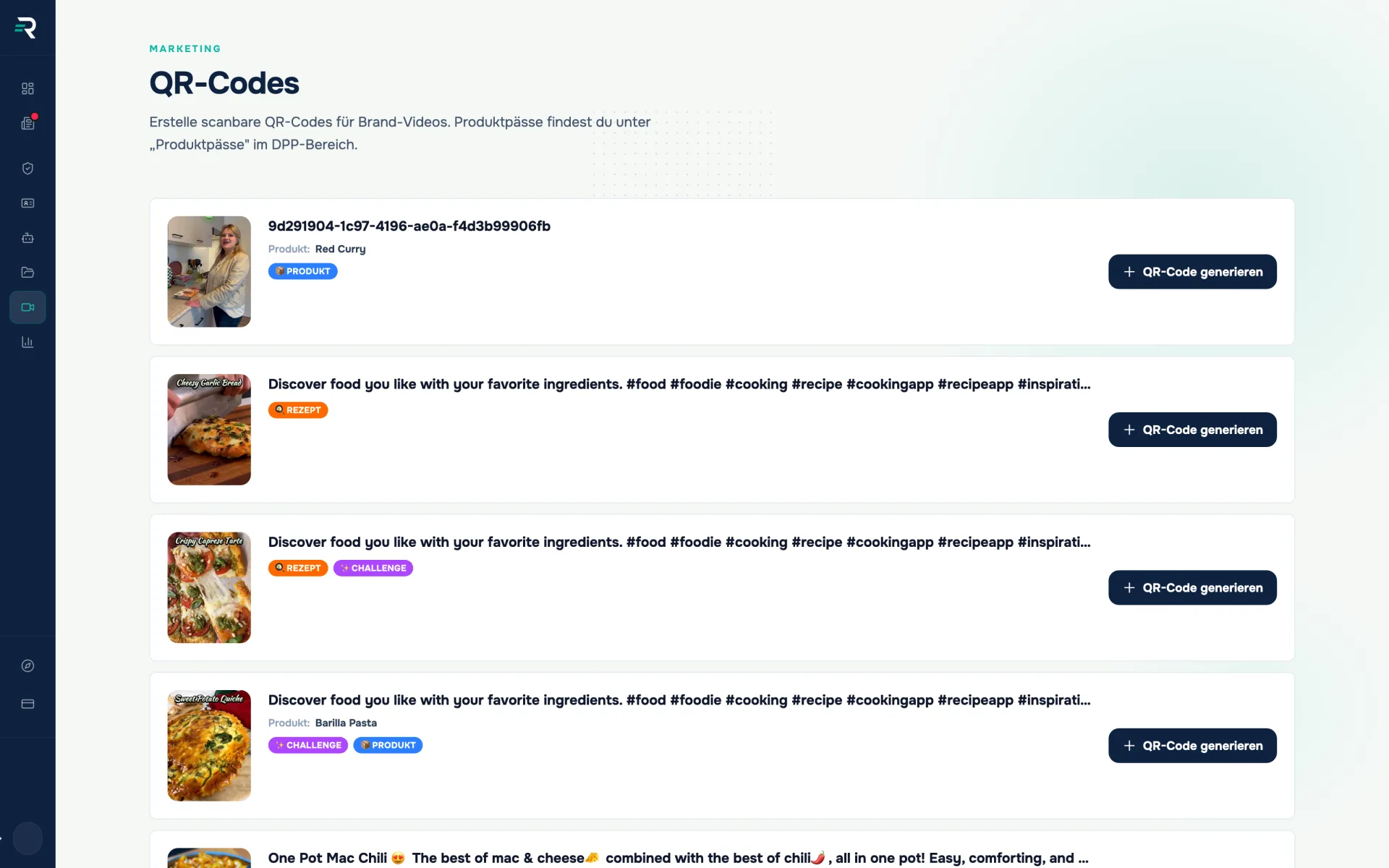
Every view is counted
Every successful view creates a scan entry — from the QR code at the shelf, from an email to a retailer or through a partner system’s passport interface. The count hangs off the passport, not off a campaign: it keeps running as long as the packaging is on the market.
Pick a period and read it
You switch between 7, 30, 90 and 365 days. At the top sit scans in the window, unique visitors and the total since the beginning — the last of these stays the reference point when a short window looks empty. The daily curve always covers the whole window, including the days without a view.
Turn the numbers into something
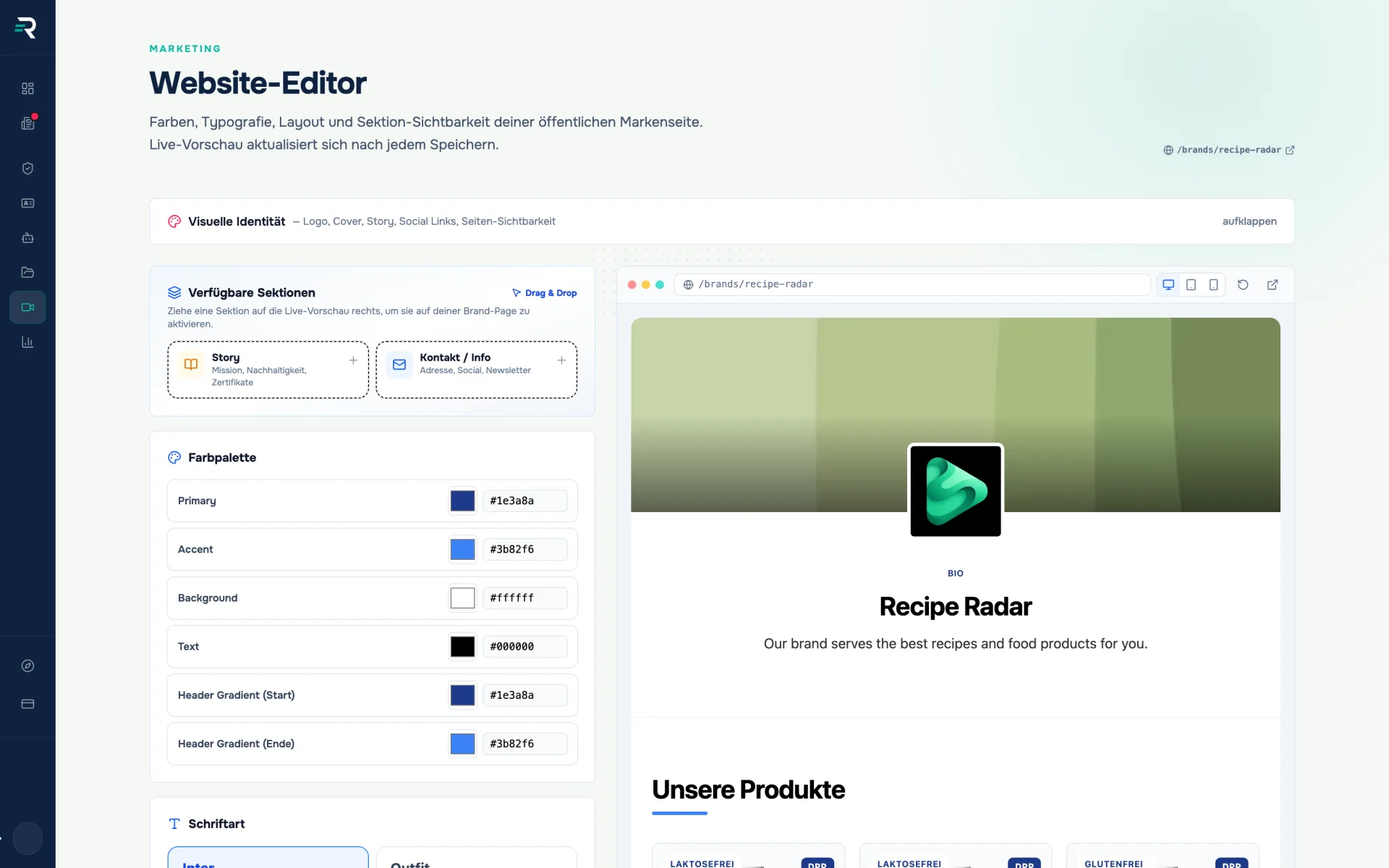
Top products list scans, unique visitors, GTIN and the link to the public page — one click and you see what the consumer sees. Countries and languages show where a translation is missing; automated visits are reported separately so a crawler does not pass as demand. Whatever stands out, you fix directly on the brand page.
What matters most
Measure reach without recording people
Put a third-party marketing tracker on a public product page and you buy yourself consent questions while still only getting website statistics. Reguly therefore counts views, not people: no IP storage, and a hashed identifier for unique visitors — the note sits in the module next to the figure, not in the small print. You get a view of your product instead of a personal profile you neither need nor want to be responsible for.
Brand & marketing
You want to know whether the QR code on the packaging is actually being used — and for which products.
Packaging & compliance
You can see which passports in circulation get attention and therefore have to be right on content first.
Management
You get a number instead of a feeling: how often the digital product passport is actually retrieved.
How it fits together
One set of data that carries forward
01
Product passports
provides the public page
public passport address · GTIN · Product name
02
QR codes
brings the passport onto the packaging
Scan entry point · Referrer
03
Analytics
counts the views and breaks them down
Scans per day · Top products · Country, language, device
04
Website editor
picks the insight back up
sharpened content · Languages
Frequently asked questions
What counts as a scan?
Every successful public view of a product passport. Whether the view comes from a scanned QR code or through the passport interface makes no difference to the count.
Are IP addresses or personal data stored?
No. IP addresses are not stored. A hashed identifier is used to count unique visitors — the module points this out itself in the figures section.
Do I have to install anything for the measurement?
No. The count hangs off the public product passport itself. There is no script that would have to be embedded in someone else’s shop, and no second provider reading the views.
Why is the referrer sometimes empty?
Because the visit came directly — typical for a scan from the label — or because the visiting browser did not send an origin. The module reports both as a state without referrer data instead of inventing a source.
Passt dazu
A QR code that never has to be reprinted.
Product passports shows for every product whether a Digital Product Passport is live, generates the matching QR code and routes every scan to the public product page.
Every value knows where it came from.
The data hub brings together all packaging data across sources, shows the completeness rate and makes it traceable where every value came from.
Every piece of evidence is ready, none expires quietly.
The compliance vault keeps every piece of evidence in one place — test reports, certificates and declarations, versioned and with expiry monitoring.
The passport first, then the numbers
We will show you on one of your products how the QR code, the product passport and the scan analysis work together.