

Technical documentation vs DoC: what goes in the dossier

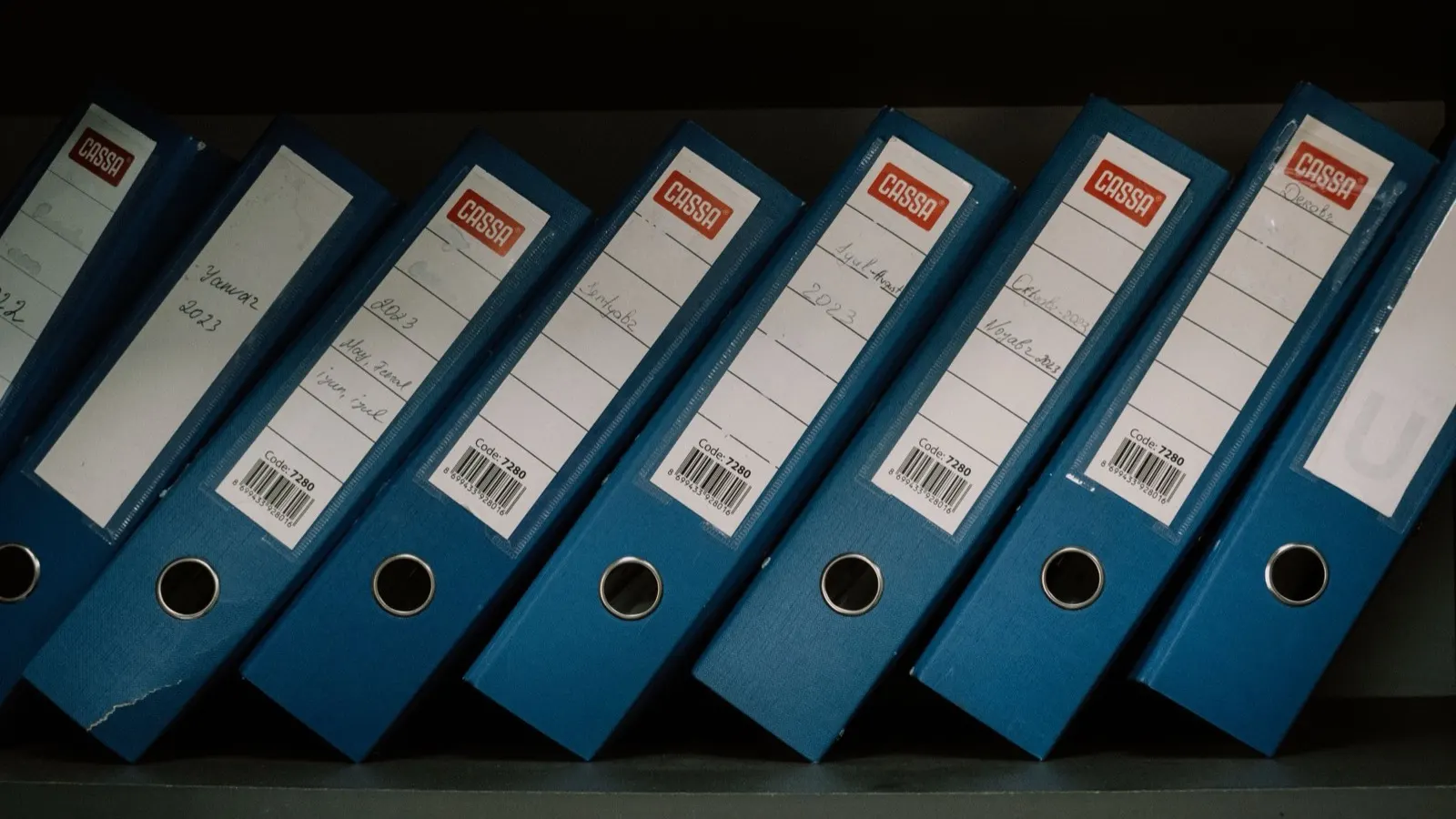
The short version first: these are not alternatives but two parts of the same evidence package. The EU declaration of conformity under Annex VIII is the legally binding assurance that your packaging meets the requirements. The technical documentation under Annex VII is the proof on which that assurance rests. Sign the declaration without building the documentation behind it and you have a document — but no evidence.
- Declaration of conformity
- Annex VIII — the assurance
- Technical documentation
- Annex VII — the proof
- Unit of reference
- Per packaging item, not per product line
- Retention
- 5 years single-use / 10 years reusable
The difference in one sentence
The declaration of conformity says that something is true. The technical documentation shows why it is true. The declaration is a short, signed document with a handful of mandatory fields; the documentation is the underlying collection of descriptions, calculations, test reports and supplier evidence. Under the Module A procedure — internal production control — you produce both yourself, with no notified body involved. That is exactly why the documentation matters so much: there is no third party confirming for you that the declaration holds.
A common misconception
- The declaration of conformity is the actual evidence.
- One dossier covers a whole product family.
- The documentation can be supplied later if the authority asks.
- A supplier assurance by email is enough as proof.
- The minimisation justification can be left out because it cannot be measured.
- Once created, the dossier stays valid.
How it actually is
- The declaration points to the documentation — that is what carries the evidence.
- Every packaging item needs its own dossier.
- A ten-day deadline only works for documents that are already in order.
- Whatever the documentation refers to has to be filed and findable.
- It is part of the documentation — including as a traceable justification.
- Change the material and the assessment changes. Without versioning there is no evidence for the moment of placing on the market.
What goes into the technical documentation?
Annex VII sets the frame, not a rigid form. You have to make it traceable that every relevant requirement was checked and with what result. In practice that covers:
- Description of the packaging: construction, components, materials, weights, intended use.
- Manufacturing process: how and where the packaging is produced, including relevant supply steps.
- Material requirements: limits for heavy metals, information on substances of concern such as PFAS.
- Minimisation of volume and weight: the justification for why the packaging is not smaller or lighter.
- Recyclability: assessment and grading against the design-for-recycling criteria.
- Recycled content: the calculated annual average per manufacturing plant and packaging type, with proof of origin.
- Test reports and measurement results evidencing the above.
What goes into the declaration of conformity?
Considerably less — and that is exactly what leads to the widespread misconception that the declaration is where the effort lies. It identifies the packaging unambiguously, names the producer, declares conformity with the requirements of the regulation, refers to the standards applied and closes with place, date and signature. It contains no test results. It points to them.
Rule of thumb
The declaration is the cover sheet, the documentation is the file. The authority will as a rule ask for the cover sheet first — and then for the file.
Why the declaration does not hold without the documentation
By signing the declaration of conformity you take responsibility for the statement it contains. When market surveillance arrives and requests the documents, it is not the declaration that gets examined — that is undisputed, you issued it yourself. What gets examined is whether the documentation behind it supports the statement. If it is missing or patchy, a signed assurance stands there with nothing under it. In regulatory terms that is a worse position than having declared nothing at all.
Who does what — producer, importer, authorised representative
- Producer: carries out the conformity assessment, creates the technical documentation and issues the declaration of conformity. The German text of the regulation says “Erzeuger”, not “Hersteller”.
- Importer: additionally keeps a copy of the EU declaration of conformity (Art. 18(7)) and has to ensure the technical documentation is available on request.
- Authorised representative: may keep and produce the documents but not create them (Art. 17). Creation stays with the producer.
- Suppliers: provide the supporting documents that feed into your documentation (Art. 16) — you have to request them yourself.
The deadlines that determine your filing system
The documents have to be retained for five years for single-use and ten years for reusable packaging (Art. 15(3)). On a reasoned request from the authority they have to be produced within ten days. Ten days is not enough to gather evidence out of email inboxes and shared drives — it is only enough to hand over something that is already in order.
One dossier per packaging item, not per product line
The most common structural error: a single collective folder for a whole product family. The evidence obligation attaches to the packaging as a product. Two variants of the same brand with different material, weight or suppliers are two packaging items — and need two dossiers. There is one practical exception: recycled content under Art. 7 is not determined per packaging item but as an annual average per manufacturing plant and packaging type. That single value then feeds into several dossiers.
The declaration of conformity costs an hour. The technical documentation costs half a year of preparation — and decides whether the declaration holds up in an inspection.
Important: the legal classification of your specific role and packaging portfolio belongs in the hands of your law firm or specialist department. This article sets out the two layers of evidence but does not replace legal advice.
- Regulation (EU) 2025/40 (PPWR), OJ L 2025/40 of 22.1.2025 — in particular Art. 5–11, 15, 16, 17, 18, 39; Annexes VII and VIII.
- Conformity assessment under Module A (internal production control) — with no notified body involved.
- As at August 2026. Not legal advice; check role assignment and national transposition on the facts.
Talk to us
Both parts in one dossier
Reguly produces the declaration of conformity and builds the complete Annex VII evidence package from it — per packaging item, filed in one place.
See the PPWR dossier