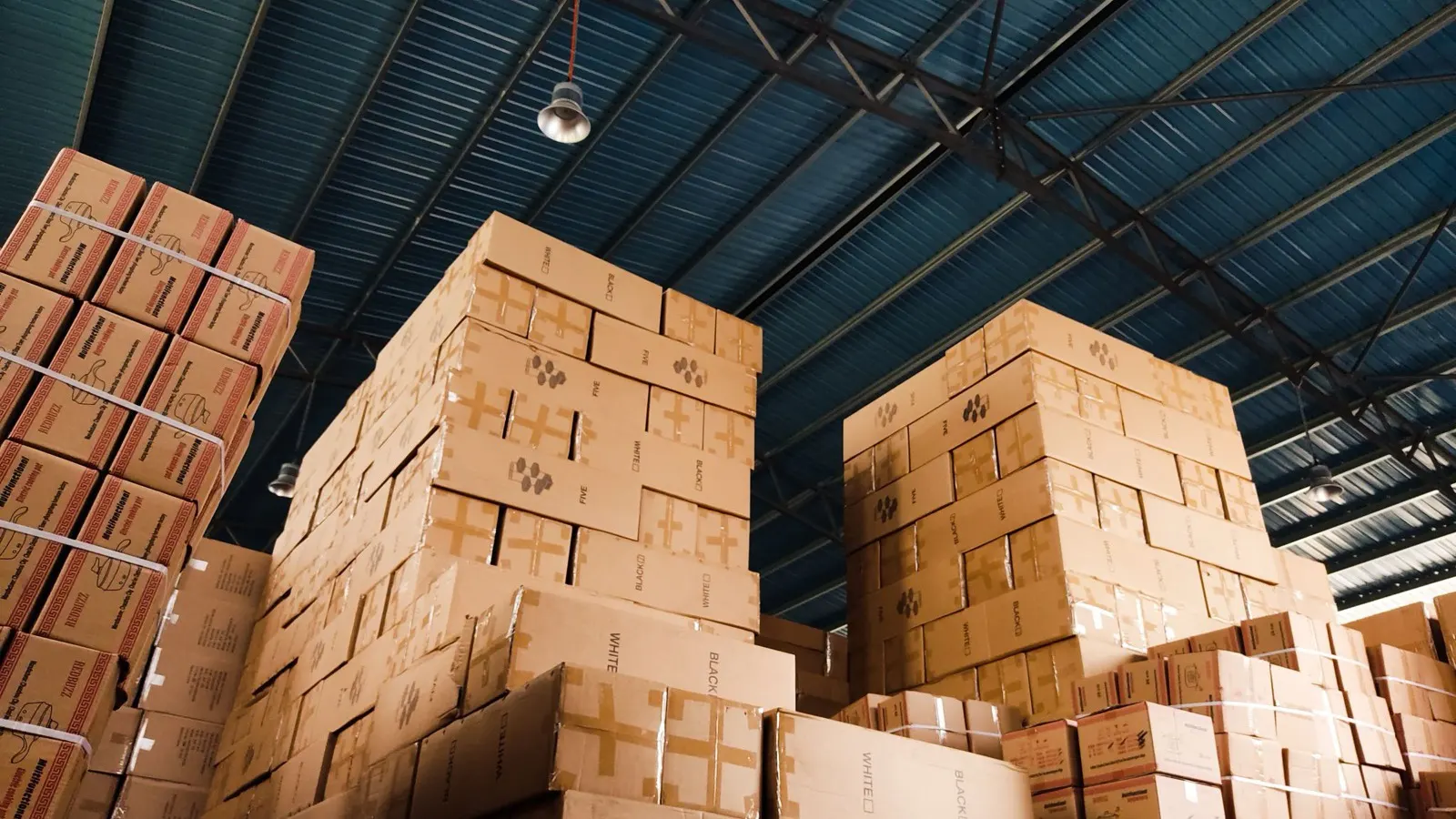

The PPWR in footwear and fashion


Few sectors package in as many layers as footwear and fashion: the shoe box is sales packaging and brand carrier at once, inside it sits tissue paper, around it goes a shipping carton, in store a carry bag, and in between stacks of cartons on pallets. Since 12 August 2026 Regulation (EU) 2025/40 (the PPWR) applies to every one of those layers — with different duties and different people responsible. This article sorts out what applies to whom, where retail typically gets the role question wrong, and why the 50 per cent limit coming in 2030 is the hardest requirement in the whole text for anyone shipping shoes.
- Applicable since
- 12 August 2026 (Art. 71 PPWR)
- Layers affected
- Shoe box, tissue paper, shipping carton, carry bag, void fill, transport packaging
- Core duty
- Technical documentation (Annex VII) and EU declaration of conformity (Art. 39, Annex VIII)
- Empty-space ratio
- no more than 50 % from 1 January 2030 (Art. 24(1))
- Void fill
- counts as empty space, not as filled volume (Art. 24(3))
- Sales packaging
- empty space down to the minimum from 12 February 2028 (Art. 24(4))
Every layer is a packaging in its own right
The most common mistake in a first stocktake is treating “our packaging” as one item. The PPWR does not recognise that shorthand: it distinguishes sales, grouped, transport and e-commerce packaging, and it attaches duties to each of them. A pair of trainers shipped from an online shop usually moves four to six separate packagings — and each of them needs its own line in the documentation in the end.
- Shoe box — sales packaging, usually branded and therefore almost always your own manufacturer responsibility.
- Tissue paper, shaped inserts, desiccant sachets — packaging components in their own right, with their own material and substance requirements.
- Shipping carton — e-commerce packaging; later subject to the empty-space ratio under Art. 24(1).
- Void fill — paper cushioning, air pillows, chips; expressly counted as empty space in the assessment.
- Carry bag in the physical store — sales packaging, often own-brand and therefore placed on the market under your own name.
- Outer carton and pallet material in goods-in — transport packaging, often overlooked because it never reaches the customer.
The role question: who is the manufacturer in shoe retail?
The PPWR separates two roles that everyday English tends to blur. The manufacturer is responsible for the packaging meeting the requirements — they draw up the technical documentation and the declaration of conformity. The producer is responsible for later disposal: registration in the national register, volume reporting, financial contribution. What decides the allocation is not who operates the machine but whose name is on the packaging and who first makes it available in a member state.
For retail that means a distinction the Commission has sharpened in its interpretative guidance: for neutral standard cartons without any customisation, the carton producer is regularly the manufacturer — not the retailer who merely fills them. As soon as the carton is made to your own specification, the role shifts. And that applies expressly even without a printed logo: bespoke dimensions, a special grade or a specified material composition are enough, because the packaging then comes into being to your own specification.
Typically not your manufacturer role
- A neutral brown standard carton from the catalogue, filled unchanged
- A branded shoe packed by its maker that you resell unchanged under someone else’s brand
- Standard void fill off the roll without your own specification
- The supplier is established in the Union and supplies a micro-enterprise — under 10 staff and no more than €2m turnover or balance-sheet total
Your manufacturer role
- A shoe box with your logo, your design or your own brand
- A shipping carton in bespoke dimensions or to your own specification — even without printing
- Own-brand goods you have made and sell under your own label
- Any conformity-relevant change to a packaging already placed on the market, such as relabelling or repacking (Art. 21)
Importing from third countries
Anyone sourcing shoes directly from Asia is an importer under Art. 18: before placing on the market you have to check that the manufacturer duties were met, keep a copy of the EU declaration of conformity and add your own contact details. In practice this is the most laborious constellation, because the evidence first has to be obtained from a supply chain that has never heard of Annex VII.
The 50 per cent limit — the real logistics issue
From 1 January 2030 the empty-space ratio in grouped, transport and e-commerce packaging may not exceed 50 per cent (Art. 24(1)); the calculation methodology sits in Annex IV and the evidence runs through the technical documentation. Empty space is the difference between the volume of the shipping carton and the volume of the sales packaging inside it. What is decisive — and regularly underestimated in the sector — is Art. 24(3): paper cushioning, air pillows, foam, wood wool and chips count as empty space. Filling an oversized box with paper does not improve the ratio; it worsens your evidential position.
For shoe shippers this is structurally harder than for many other ranges. A shoe box is a rigid cuboid with fixed edge lengths, comes in few sizes and has to fit into a shipping carton that can take knocks. Anyone stocking only two or three shipping carton sizes inevitably produces air at the small end. The answer rarely lies in thinner board but in more carton variants, in cartons with height scoring, or in mailing bags where the shoe box itself can serve as the e-commerce packaging.
The exemption that halves the work
If you use a sales packaging directly as e-commerce packaging — shipping the shoe box with a label on it — you are exempt from the 50 per cent duty in Art. 24(1) (Art. 24(5)). The minimisation requirements of Art. 10 still apply. This variant is also the only one that avoids double packaging, and therefore the most obvious route to 2030 — though it demands a box that survives transport without an outer carton and gives nothing away about its contents.
A second rule bites earlier: from 12 February 2028 empty space in sales packaging has to be limited to the functional minimum (Art. 24(4)). For the shoe box itself that means generous fits as brand staging become something you have to justify. And running across all of it is Art. 10: weight and volume have to be reduced to the minimum necessary for function and safety; double walls, false bottoms and superfluous layers that merely simulate volume may not be placed on the market.
What the trade associations criticise
The sector associations largely support the aims of the regulation but criticise how workable it is and the legal uncertainty in allocating responsibilities. The German retail association HDE warns of a lack of clarity in classifying packaging materials and calls for a sense of proportion in enforcement.
For many companies, essential questions about responsibilities and their duties are still open.
It is decisive that new statutory requirements can be implemented in a workable way.
The HDS/L calls for a penalty-free transition phase and points to the additional costs for mid-sized companies. The e-commerce association bevh describes online retailers having to rebuild after more than a year of preparation and asks for a postponement until the open questions are settled. In practice that means: anyone waiting today for a final interpretation is probably waiting until after the outstanding legal acts are adopted — while the evidence duties run on regardless.
Five questions that settle whether this affects you
- Do you resell only pre-packed third-party brands, or do the box, bag or label carry your name? The second answer makes you the manufacturer.
- Are your shipping cartons catalogue stock or made to your own dimensions? Your own specification is enough to shift the role — even without printing.
- Do you import directly from a third country? Then the importer duties under Art. 18 apply on top.
- In which member states do you first make packaging available? Registration and volume reporting fall due country by country; in Germany that runs through LUCID.
- How many shipping carton sizes do you stock today, and how much empty space is in your best-selling size? That number decides how big the rebuild to 2030 becomes.
Document existing stock now
Packaging lawfully placed on the market before 12 August 2026 may be used up — what governs is the date of placing on the market, not the date of later delivery. The proof is invoices and delivery notes. Anyone ordering cartons in large batches should secure that evidence now, while it can still be found.
Note
This overview is based on publicly available sources and the text of the regulation; it is not binding legal advice. For an assessment of your individual case, please consult a lawyer or an accredited body.
Talk to us
Capture your packaging portfolio in a structured way
The free Annex VII checklist walks layer by layer through the technical documentation — from material composition to the empty-space evidence.
Download the checklist