
A grace period until 2028: what the industry associations are asking for


Five weeks after the PPWR became applicable, the German Retail Federation (HDE) is calling for a transition period until 1 January 2028. In parallel, an alliance of IHK Schleswig-Holstein, UVNord, Die Familienunternehmer and the association of women entrepreneurs (VdU) is campaigning against individual requirements under the name “Stop the Clock”. Both initiatives target the same gap: the regulation applies, but the technical rules needed to measure compliance are still missing. This article explains what exactly is being demanded, what stands a chance, and what applies to your company in the meantime.
- Who
- Handelsverband Deutschland (HDE), the German retail federation
- When
- 16 September 2026
- Demand
- An EU-wide transition period until 1 January 2028
- Core
- Suspension of fines, distribution bans and recalls
- Second alliance
- IHK Schleswig-Holstein, UVNord, Die Familienunternehmer, VdU
- Campaign
- “Stop the Clock für die PPWR”, running until 5 October 2026
- Legal status today
- The PPWR has applied unchanged since 12 August 2026
- Status
- Association demands — no legislative procedure
What the HDE is demanding
On 16 September 2026, the HDE came out in favour of an EU-wide transition period until 1 January 2028. It would cover the new PPWR requirements for companies and national authorities alike. During that time, enforcement backed by sanctions would be suspended: no fines, no distribution bans, no recalls and no comparable burdensome measures, as long as a company can show that it has started implementing. The association asks for the same flexibility for future implementing acts and across all levels of administration.
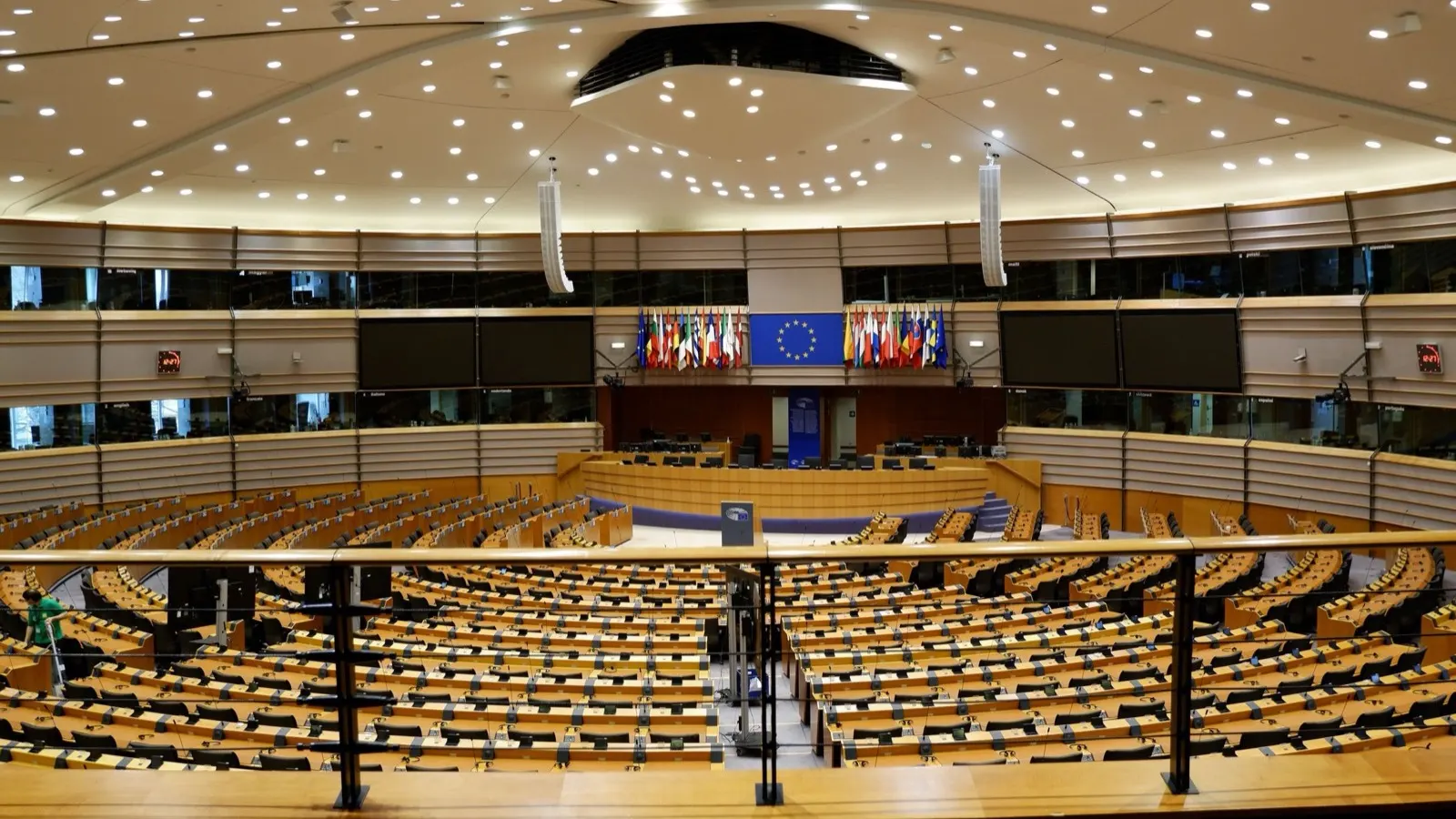
The PPWR introduces ambitious new requirements — yet key technical details remain unresolved weeks after it became applicable.
The reasoning is notably matter-of-fact: it is not about the goal of the regulation, but about whether compliance can be measured at all. For central obligations, the assessment methods, harmonised standards and guidelines that companies would align with are missing. Anyone assessing packaging today is doing so against criteria the Commission has yet to specify. Investments in materials, machinery and software are therefore made on a basis that may still shift.
The second front: “Stop the Clock”
One day later, on 17 September 2026, a northern German alliance launched a protest campaign. IHK Schleswig-Holstein, UVNord, Die Familienunternehmer and the VdU are calling on companies to send symbolic letters of authorisation to Members of the European Parliament until 5 October 2026 and to share photos of boxes marked “Stop the clock” on social media. Unlike the HDE, the alliance is not asking for a blanket deadline but targets two specific obligations.
- The authorised representative duty: it should be suspended for cross-border direct sales. Online and mail-order retailers are hit hardest, as they need a separate representative in every target country.
- Labelling requirements: the alliance criticises that contact details of manufacturers or upstream suppliers could become visible on the packaging — exposing internal supplier relationships.
- Counterproposal: a “Responsible Economic Operator” model, where only one responsible company acts as the contact point for the authorities.
We are not saying: scrap the PPWR. We are saying: make it workable.
Context: what this means for the legal situation
Here is the distinction that often gets lost in the coverage. An association demand is not a legislative procedure. For a grace period to become law, the European Commission would have to table a proposal and Parliament and Council would have to agree. None of that has happened so far. Until then, Regulation (EU) 2025/40 applies unchanged and directly in all member states.
What the demands can achieve
- Political pressure ahead of the upcoming talks on the environmental omnibus
- Attention on the missing implementing acts and standards
- Restraint by authorities in day-to-day enforcement
- Individual duties such as the authorised representative back on the agenda
What they do not achieve
- No change to the law in force — the PPWR has applied since 12 August 2026
- No protection against warning letters from competitors or associations under competition law
- No postponement of documentation duties that evidence the state at the time of placing on the market
- No certainty that a grace period will materialise at all
Enforcement practice is not the law
The European Commission has already recommended that authorities issue warnings rather than sanctions for certain duties. That is a matter of enforcement practice, not of law. Competitors and claimant associations are not bound by that recommendation — they rely on competition law. A grace period granted by authorities therefore offers no protection against civil claims.
Untouched: declaration of conformity and technical documentation
None of the demands touches the EU declaration of conformity (Art. 39) or the technical documentation (Annex VII). Even if the grace period came, the duty would remain — it would simply not be enforced with fines for a while. What matters is a detail that cannot be fixed retroactively: both documents have to evidence the state of the packaging at the time it was placed on the market. Whatever you fail to document today cannot be reconstructed in 2028, because by then the goods have long been on the market.
How this could develop
Regulation (EU) 2025/40 applies directly in all member states while central implementing acts are still pending.
Berlin tables a ten-tonne threshold for the authorised representative duty and a registration deferral as part of the environmental omnibus.
The retail federation demands an EU-wide transition period until 1 January 2028, including suspension of sanction-backed enforcement.
The northern German alliance targets the authorised representative duty and labelling rules and proposes the Responsible Economic Operator.
Until then, the alliance collects contributions from companies and forwards them to Members of the European Parliament.
Only once Commission, Parliament and Council adopt an amendment does anything about the obligations actually change.
What this means for your company
For day-to-day practice, the conclusion is uncomfortable but clear: plan without a grace period and treat it as a bonus if it arrives. Anyone who pauses implementation with reference to these demands loses time that will be missing later — and ends up without evidence if the deadline never comes. There is also a detail that tends to be overlooked: even the HDE proposal requires companies to demonstrate that implementation has begun. A grace period, too, would presuppose documentation.
- Carry on, but prioritise. Duties that are already fully defined — labelling, documentation, registration — come before those whose test methods are still open.
- Evidence your implementation status. Record what you checked, decided and commissioned, and when. That helps in every scenario: with authorities, with customers and with a possible grace period.
- Document open points deliberately. Where an assessment method is missing, record the assumption you used and the date instead of leaving the gap uncommented.
- Look at target markets individually. Whether the authorised representative duty really affects you depends on country and volume — there is a separate article on the proposed relief for small retailers.
- Standardise the mandatory part — or outsource it. That is exactly what Reguly is for: you capture your packaging data once, and the platform generates technical documentation and declarations of conformity from it, archives the evidence in an audit-proof way and shows which deadlines come next. If a grace period changes the legal situation, the timeline adjusts without you having to rebuild the data.
Note
This overview is based on publicly available sources and is not binding legal advice. For an assessment of your individual case, please consult a lawyer or an accredited body.
Talk to us
Assess where you stand in ten minutes
The free PPWR check asks about roles, packaging types and target markets and shows which obligations already apply to you — regardless of how the grace period debate ends.
Start PPWR check