
PPWR and the pharmaceutical industry: which exemptions apply and what remains mandatory

Since 12 August 2026, the EU Packaging and Packaging Waste Regulation (PPWR) has also applied to the packaging of medicinal products. It provides exemptions for the pharmaceutical industry, because the packaging of a medicine is part of its marketing authorisation and patient safety comes first. The European Commission has since confirmed this special status. The exemptions are narrow, however: they cover recyclability, recycled content and, in certain cases, labelling. All other obligations also apply to pharmaceutical companies. This article explains which packaging is exempt, under what conditions, and what affected companies should check now.
- Legal basis
- Regulation (EU) 2025/40 (PPWR)
- Applies since
- 12 August 2026
- Recyclability
- exemption under Article 6(11)
- Recycled content
- exemption under Article 7(4)
- Labelling
- exempt only case by case (Article 12(11))
- Review
- recycled content by 1 January 2028, recyclability by 1 January 2035
- Not exempt
- conformity, substances, minimisation, producer responsibility
- Also affected
- medical devices and in vitro diagnostics
What the Commission has confirmed
The occasion was a written question from the European Parliament (E-002296/2026). Three MEPs asked how more sustainable medicinal product packaging, for example using substitutes for PVC, could be promoted, and how to deal with the regulatory hurdles when the packaging of an already authorised medicine is to be changed. Answering on behalf of the Commission, Health Commissioner Olivér Várhelyi confirmed the PPWR exemptions for medicinal product packaging. The Commission justifies them on the grounds that the packaging of a medicinal product is an integral part of its marketing authorisation, with patient safety at the centre.
At the same time, the Commission announced that it will review by 2035 whether the exemptions from the recyclability requirements, including those for medicinal products, should be revised. It did not announce a separate initiative on PVC substitution.
On packaging changes for authorised medicines, the Commission refers to existing pharmaceutical law: it already provides procedures for the European Medicines Agency to assess post-authorisation changes according to their nature and potential impact on the medicinal product. The Commission is monitoring how sustainability goals and regulatory requirements can be reconciled. It also points to research projects under Horizon Europe. Among other things, the SolRec2 project has developed prototypes and recycling strategies for pharmaceutical blisters, e-paper labels and laminate packaging waste. The Commission intends to continue supporting the development of new packaging materials through European research programmes.
The answer therefore provides planning certainty but does not change the law. It confirms what the Regulation says: the exemptions apply, they are subject to conditions, and they are subject to review. Switching to recyclable packaging still means going through the established variation procedures for the marketing authorisation.
The exemptions at a glance
| Obligation | Exempt | Condition | Review |
|---|---|---|---|
| Recyclability (Article 6) |
| Outer packaging only where it is necessary to comply with specific requirements to preserve the quality of the medicinal product | by 1 January 2035 (Article 6(12)) |
| Recycled content in plastic packaging (Article 7) | the same packaging as under Article 6 (Article 7(4)) | as under Article 6 | by 1 January 2028 (Article 7(12)) |
| Harmonised labelling (Article 12) | immediate and outer packaging of medicinal products, medical devices and in vitro diagnostics |
| no separate deadline |
Obligation
Recyclability (Article 6)
- Exempt
- immediate packaging of human and veterinary medicinal products
- outer packaging of medicinal products
- contact-sensitive packaging of medical devices and in vitro diagnostics
- Condition
- Outer packaging only where it is necessary to comply with specific requirements to preserve the quality of the medicinal product
- Review
- by 1 January 2035 (Article 6(12))
Obligation
Recycled content in plastic packaging (Article 7)
- Exempt
- the same packaging as under Article 6 (Article 7(4))
- Condition
- as under Article 6
- Review
- by 1 January 2028 (Article 7(12))
Obligation
Harmonised labelling (Article 12)
- Exempt
- immediate and outer packaging of medicinal products, medical devices and in vitro diagnostics
- Condition
- no space because of other labelling rules under pharmaceutical or medical device law
- or the labelling could compromise safe use
- Review
- no separate deadline
Immediate and outer packaging: the key distinction
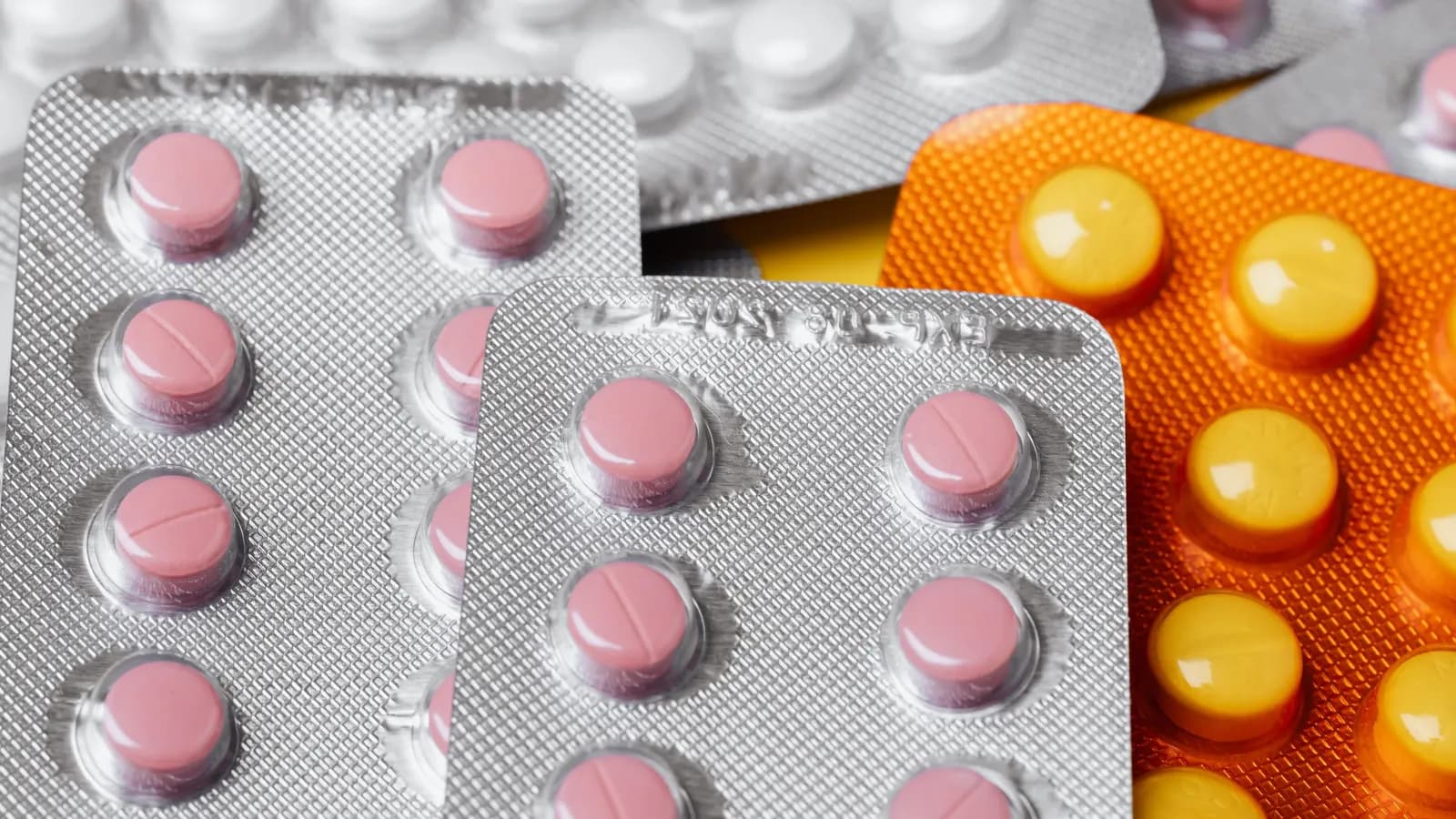
The PPWR adopts the terms used in pharmaceutical law (Directive 2001/83/EC and Regulation (EU) 2019/6). Immediate packaging is the container or other form of packaging immediately in contact with the medicinal product, such as blisters, ampoules, vials or pre-filled syringes. It is exempt from Articles 6 and 7 without further conditions.
Outer packaging is the packaging into which the immediate packaging is placed, usually the folding carton. For outer packaging, the exemption only applies where it is necessary to comply with specific requirements to preserve the quality of the medicinal product, for example protection from light or moisture. A folding carton that mainly serves presentation, labelling or transport does not qualify.
No blanket exemption for secondary packaging
Anyone relying on the exemption for a folding carton must be able to show that it is necessary for the quality of the medicinal product. Grouped, shipping and transport packaging is not covered by the exemptions and must fully meet the requirements on recyclability and recycled content.
Labelling: exempt only case by case
Harmonised labelling on material composition becomes mandatory from 12 August 2028 or 24 months after the implementing acts enter into force, whichever is later. In principle, it also applies to medicinal product packaging. Article 12(11) exempts immediate and outer packaging only where there is no space on the packaging because of the labelling rules under pharmaceutical or medical device law, or where the additional labelling could compromise the safe use of the medicinal product.
The Regulation does not define when there is “no space”. That depends on how much area the harmonised pictograms require, which will only be set in the implementing acts. The exemption therefore has to be justified for each pack individually. More on the labelling obligations in “PPWR labelling under Art. 12: the obligations”.
What applies without exemption
The exemptions only concern the articles named. All other PPWR obligations apply to medicinal product packaging without restriction:
- Conformity assessment, technical documentation and EU declaration of conformity (Article 15) since 12 August 2026. Anyone relying on an exemption must also justify it in the documentation.
- Substance restrictions (Article 5): substances of concern must be minimised; lead, cadmium, mercury and hexavalent chromium are subject to a combined limit of 100 mg/kg.
- Packaging minimisation (Article 10): from 1 January 2030, weight and volume must be reduced to the minimum necessary for functionality, demonstrated in the technical documentation.
- Empty space (Article 24): from 2030, grouped, transport and e-commerce packaging may have an empty space ratio of no more than 50 %. The exemptions under Articles 6 and 7 do not extend to this.
- Extended producer responsibility (Article 44 et seq.): registration and participation in waste management; in Germany still via the LUCID packaging register.
Product or packaging?
Before any exemption check comes the question of whether the item is packaging at all. Under Article 3(1) PPWR, an item that contains a product throughout its lifetime without being an integral part of the product is packaging. For inhalers, eye drop containers or nasal sprays the distinction is not obvious, because the container also serves administration. These cases require a product-specific assessment.
Equally important is the role under the PPWR. The manufacturer is whoever has packaging or a packaged product designed or manufactured under their own name or trademark. Only a company placing packaging from a third country on the Union market is an importer (Article 3(17)). This differs from the German Packaging Act: a company producing in another Member State and supplying Germany is not an importer under the PPWR.
Check whether the exemptions apply to you
Whether an exemption applies depends on the individual pack, not on the company or the sector. Pharmaceutical companies, manufacturers of medical devices and in vitro diagnostics, and their contract manufacturers and packaging suppliers should check and document for each pack whether the conditions of the exemption are met. Where they are not, the PPWR obligations apply in full.
What affected companies should do now
- Record packaging by level: list immediate packaging, outer packaging, grouped packaging and transport packaging separately for each product.
- Document the quality link of the folding carton: where outer packaging is to be exempt, record in writing how it relates to the quality requirements in the marketing authorisation, such as protection from light or moisture.
- Clarify borderline cases: check and justify whether applicators, inhalers and dropper containers are products or packaging.
- Assess labelling space: identify early where the harmonised label will fit from 2028 and where an exemption under Article 12(11) needs to be justified. Artwork changes may trigger variations to the marketing authorisation.
- Meet the obligations that are not exempt: declaration of conformity, technical documentation and registration are required regardless of the exemptions.
- Plan for the reviews: the Commission will review the recycled content exemptions by 2028 and the recyclability exemptions by 2035. New packaging developments should therefore already consider recyclable alternatives.
Key dates
Regulation (EU) 2025/40 enters into force.
Conformity assessment, technical documentation and substance restrictions also apply to medicinal product packaging.
The Commission assesses whether the exemptions under Article 7(4) need to be revised.
Earliest date for the labelling obligation under Article 12; exemptions for medicinal products only case by case.
The requirements apply to all packaging that is not exempt, including grouped packaging and folding cartons not needed for quality.
The Commission assesses whether the exemptions under Article 6(11) should continue.
Note
This overview is based on publicly available sources and is not binding legal advice. For an assessment of your individual case, please consult a lawyer or an accredited body.
Talk to us
Assess where you stand in ten minutes
The free PPWR check asks about roles, packaging types and target markets and shows which obligations already apply to your company.
Start PPWR check